
15 Scientifically Proven Benefits of Learning Abacus for Kids
Every parent wants their child to succeed academically and personally.
In today’s highly competitive world, strong cognitive skills have become more important than ever.
Parents are constantly searching for activities that can improve concentration, memory, confidence, and problem-solving abilities.
Among the many educational programs available, abacus training continues to stand out as one of the most effective brain development tools for children.
Although many people associate abacus with mathematics, its benefits extend far beyond simple calculations.
Abacus training helps develop essential life skills that contribute to a child’s overall growth and success.
In this article, we will explore 15 scientifically proven benefits of learning abacus and why it remains one of the most valuable educational investments parents can make.
What Makes Abacus Different?
Unlike traditional mathematics, abacus training combines visual learning, auditory processing, concentration, and mental visualization.
Children initially learn calculations using a physical abacus.
As they progress, they begin visualizing the abacus in their minds.
This process activates multiple areas of the brain simultaneously.
The result is enhanced cognitive development that supports learning in various aspects of life.
Let’s explore the key benefits.
1. Improves Concentration
Concentration is one of the most important skills for academic success.
Children today face constant distractions from screens, social media, and digital entertainment.
Abacus training requires focused attention.
Students must carefully observe bead movements and numerical patterns.
Regular practice strengthens attention span and improves the ability to stay focused for longer periods.
Many parents notice significant improvements in classroom performance after their children begin abacus training.
2. Enhances Memory Power
Memory plays a crucial role in learning.
Abacus students constantly store and retrieve numerical information during calculations.
This repeated mental exercise strengthens memory functions.
Over time, children develop better short-term and long-term memory.
Improved memory helps them retain lessons, instructions, and important information more effectively.
3. Develops Visualization Skills
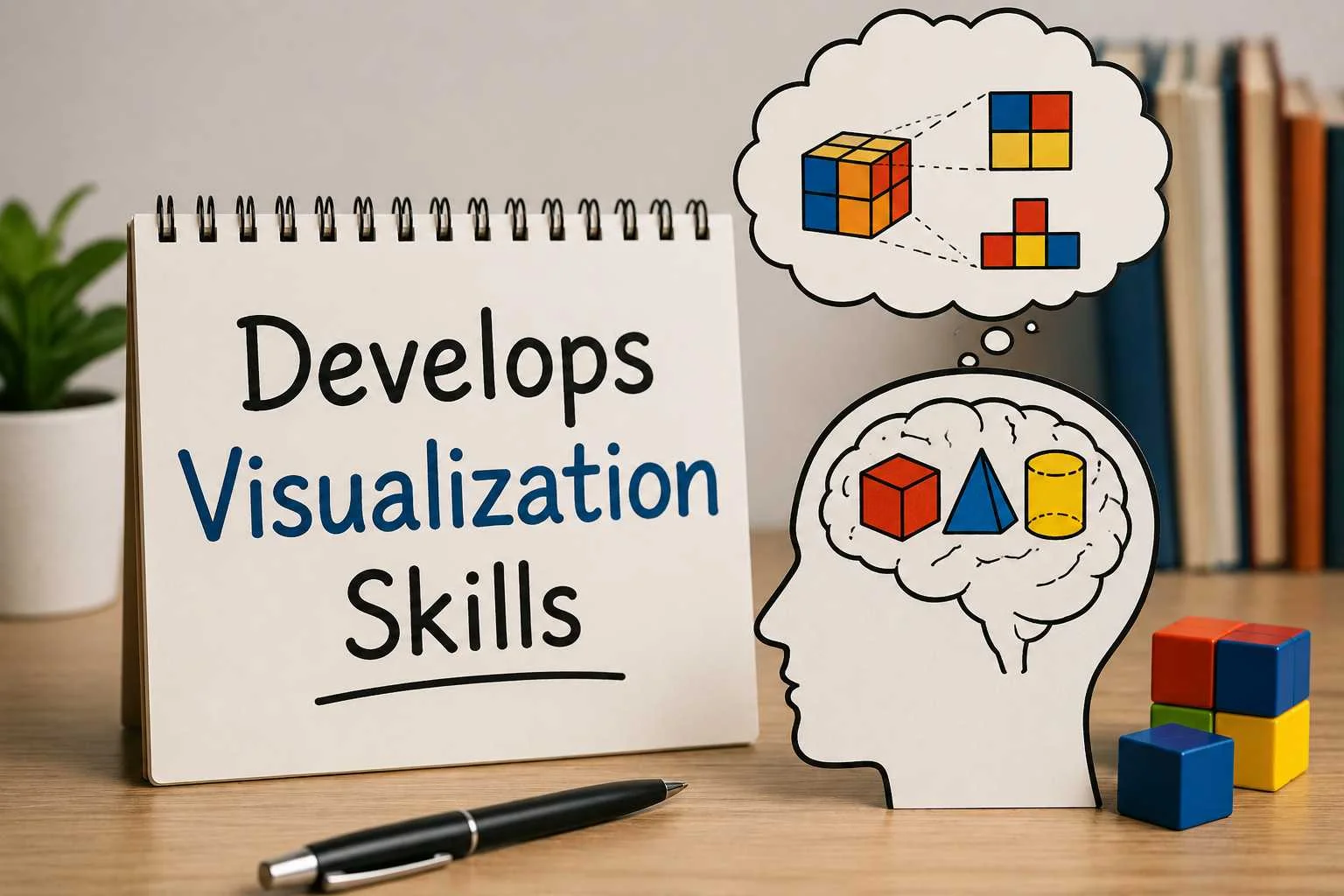
One of the most unique aspects of abacus training is visualization.
Students eventually learn to imagine the abacus in their minds.
They mentally move beads to perform calculations.
This process significantly enhances visualization abilities.
Strong visualization skills support creativity, imagination, and problem-solving in many academic subjects.
4. Increases Mental Calculation Speed
Abacus-trained children often perform calculations remarkably fast.
They develop the ability to process numbers mentally without relying on calculators.
This speed improves confidence and mathematical efficiency.
Fast mental arithmetic can also help students perform better during examinations.
5. Activates Both Sides of the Brain
The human brain consists of two hemispheres.
The left hemisphere is associated with logic and analytical thinking.
The right hemisphere supports creativity and imagination.
Most traditional education focuses heavily on left-brain activities.
Abacus training stimulates both hemispheres simultaneously.
This balanced development promotes stronger overall cognitive abilities.
6. Strengthens Problem-Solving Skills
Life constantly presents challenges that require effective solutions.
Abacus teaches children how to analyze problems systematically.
Students learn to identify patterns and develop logical approaches.
These problem-solving abilities extend beyond mathematics and benefit children throughout life.
7. Improves Listening Skills
Listening is a critical but often overlooked skill.
Many abacus exercises involve listening to numbers and instructions carefully.
Students must process information quickly and accurately.
Regular practice enhances auditory processing and listening comprehension.
Improved listening skills can positively impact classroom learning and communication.
8. Boosts Academic Performance
The benefits of abacus often translate directly into better academic results.
Improved concentration, memory, and analytical thinking support learning across multiple subjects.
Children become more efficient learners.
They can absorb information faster and retain it longer.
This often leads to stronger academic performance overall.
9. Builds Self-Confidence
Confidence plays a major role in a child’s success.
When children solve complex calculations mentally, they experience a strong sense of achievement.
This accomplishment increases self-belief.
Confident children are more willing to participate in class, ask questions, and tackle new challenges.
10. Enhances Observation Skills
Abacus students learn to pay close attention to details.
Even small mistakes in bead positioning can affect calculations.
This attention to detail strengthens observation skills.
Better observation helps children become more aware and attentive in everyday situations.
11. Encourages Independent Thinking
Modern technology often provides instant answers.
Abacus encourages children to think independently.
Students learn to rely on their own mental abilities rather than external tools.
This independence develops critical thinking and self-reliance.
These qualities are valuable both academically and personally.
12. Reduces Fear of Mathematics
Many children develop anxiety toward mathematics.
Abacus introduces numbers in a visual and interactive manner.
Children gradually become comfortable working with calculations.
As confidence grows, fear and frustration decrease.
Many students begin to enjoy mathematics after starting abacus training.
13. Improves Creativity
Although abacus is associated with numbers, it also supports creativity.
Mental visualization exercises activate the imaginative parts of the brain.
Children become more capable of creating mental images and exploring new ideas.
Creativity is an important skill for innovation and future success.
14. Develops Discipline and Patience
Success in abacus requires consistent practice.
Children learn the importance of regular effort and perseverance.
They understand that improvement comes through dedication.
These lessons help develop discipline and patience.
Such qualities benefit children throughout their educational journey.
15. Prepares Children for Future Success
The future workplace will require more than academic knowledge.
Employers increasingly value cognitive abilities such as problem-solving, adaptability, concentration, and creativity.
Abacus develops many of these essential skills.
Children who receive cognitive training early often gain advantages that continue into adulthood.
The skills learned through abacus remain valuable long after formal training ends.
The Science Behind Abacus Learning
Research in cognitive development suggests that mental arithmetic exercises stimulate multiple regions of the brain.
Activities involving visualization, memory, and problem-solving strengthen neural connections.
Abacus training combines all of these elements.
The repeated use of mental imagery encourages brain plasticity.
Brain plasticity refers to the brain’s ability to adapt and form new neural pathways.
This adaptability supports learning and intellectual growth.
The earlier children engage in brain-training activities, the greater the potential benefits.
Why More Parents Are Choosing Abacus Programs
Parents today understand that success requires more than good grades.
Children need strong cognitive skills to thrive in an increasingly complex world.
Abacus provides a structured and proven approach to developing these abilities.
The program offers benefits that extend far beyond mathematics.
It helps children become confident learners and effective thinkers.
As awareness grows, more families are turning to abacus as part of their child’s development journey.
How Long Does It Take to See Results?
Every child progresses at a different pace.
Some parents notice improvements in concentration and confidence within a few months.
More significant cognitive benefits typically emerge after consistent practice over a longer period.
Regular participation and daily practice produce the best results.
The key is consistency rather than intensity.
Even short practice sessions can generate meaningful improvements over time.
Choosing the Right Abacus Program
Not all programs are created equal.
Parents should look for qualified instructors and structured curricula.
Programs that emphasize cognitive development rather than simple calculation speed often provide the greatest long-term benefits.
Interactive learning environments can also help maintain student engagement.
The right program should encourage growth while making learning enjoyable.
Final Thoughts
Abacus is much more than a tool for performing calculations.
It is a comprehensive brain development program that strengthens concentration, memory, visualization, confidence, creativity, and problem-solving abilities.
These skills are essential for academic achievement and future success.
The 15 benefits discussed in this article demonstrate why abacus remains one of the most effective educational programs available for children.
For parents seeking a meaningful investment in their child’s future, abacus training offers lasting advantages that extend far beyond mathematics.
By developing stronger cognitive abilities today, children gain the foundation they need to thrive tomorrow.
